

A guess the artist game plays a short song clip or drops a clue about a musician, then asks you to name who it is, usually with the option to unlock more audio or extra hints. You can start in seconds: open a browser game or the Songle landing page and pick a curated playlist, no account needed. Some good reasons to try one today:
- It's a quick, low-stakes way to test how much music you actually know.
- Playlist runs turn passive listening into an active game with a score at the end.
Key Takeaways
The most effective way to improve at artist guessing is repeated playlist practice with attribute-based feedback, not one-off daily puzzles.
| Point | Details |
|---|---|
| Two core formats exist | Daily single-answer puzzles suit quick, shareable play; playlist runs suit repeated practice and training. |
| Attribute feedback speeds learning | Clues that narrow genre, era, or country reduce reliance on long audio previews. |
| Clue order matters for scoring | Open metadata before audio, and save unlocks for songs that actually stump you. |
| Account friction turns players away | Free, no-account access to a curated playlist removes the biggest early drop-off point. |
| Songle fits the playlist-run niche | Free curated playlists need no account, while custom Spotify-playlist quizzes with shareable links are a paid feature. |
Table of Contents
- How Does a Guess the Artist Game Actually Work?
- What Formats and Variants Should You Try First?
- How Can You Guess More Artists Correctly?
- Where Can You Find a Trustworthy Artist Guessing Game?
- How Does Songle Fit Into the Playlist-Run Format?
- Where Did Guess the Artist Games Come From?
- Where Do People Actually Play These Games?
- Which Guess the Artist Games Stand Out and Why?
- Who Actually Plays These Games, and Why?
- What Makes These Games Hard to Get Right?
- What Do You Actually Get Out of Playing?
- Why I Think Runs Beat Daily Puzzles for Serious Practice
- Ready to Build Your Own Playlist Run?
- Sources
How Does a Guess the Artist Game Actually Work?
Most games run on one of two clocks. There's the daily puzzle, where everyone worldwide gets the same mystery artist and a handful of guesses, then compares results with friends the next morning. And there's the run, where you move through a whole playlist, earning a score per song and a summary at the end.
The clue systems differ, too. Riffiter's daily format uses attribute feedback: a wrong guess tells you whether the real answer is close in genre, era, country, or fame level, so your second guess is smarter than a random stab. JamBase has covered similar web-based "Name That Artist" games as shareable mini-games built around this same recognition test.
Here's the typical clue sequence you'll run into:
- A short audio preview, often just a few seconds.
- A blurred or partially revealed album cover.
- Metadata hints like release year, country of origin, or featured collaborators.
- An option to unlock more audio at the cost of points.
That last part matters more than it looks. Attribute-based feedback reduces how much audio you actually need to hear before narrowing down the right answer, which is why some games reward you for guessing early instead of stalling on long previews.
What Formats and Variants Should You Try First?
Not every artist-guessing game is built the same way, and picking the right format depends on whether you want a quick daily hit or something you can grind on repeat.
- Daily single-answer puzzles. One artist, once a day, shared with friends. Artdle uses this exact structure for art history, pairing the guess with optional learning content, and music versions work the same way.
- Feature and credit-based variants. Games like Featurle flip the format by having you guess an artist from who they're featured with, a fun twist for hip hop and pop fans who track collaborations closely.
- App-based multi-question quizzes. Apps positioned as "Guess The Singer" style quizzes stack question after question in one sitting, often spanning multiple genres, which suits players who want a longer session rather than one puzzle a day.
- Playlist-run formats. Instead of one artist, you play through an entire playlist, scoring song by song. This is where Songle lives, and it's built for repeat practice and custom games rather than a single daily reveal.
Each format rewards a different kind of player, so it's worth trying more than one before deciding which keeps you coming back.
How Can You Guess More Artists Correctly?
Getting better at this game isn't about having encyclopedic music knowledge. It's about reading clues in the right order and knowing when to spend a guess versus when to spend a point.
- Open metadata before audio. Era, country, and genre tags eliminate more possibilities per second than a five-second audio clip does.
- Use your first wrong guess as data. If a game tells you the real artist is closer in decade or fame level, treat that as a filter, not a failure.
- Practice inside a genre you know less well. Running a playlist focused on an unfamiliar scene, like 90s Britpop or K-pop, builds recognition faster than replaying songs you already know cold.
- Track your streaks. Timed runs and repeat sessions on the same playlist reveal which artists you consistently miss, so you know where to focus next.
Pro Tip: Save your clue unlocks for the middle of a run, not the start. Early songs in a playlist are often more recognizable, so spend your free guesses there and bank your unlocks for the tracks that stump you later.
The core trade-off in nearly every version of this game is the same: fewer clues used means a higher score, but a rushed guess costs you more than a slow, correct one.
Where Can You Find a Trustworthy Artist Guessing Game?
You'll find these games scattered across a few channels: browser-based game hubs, music subreddits and forums where fans share favorites, app stores under quiz or trivia categories, and social media posts linking to a daily result.
Before you commit time to one, run it through a few filters:
- Free access first. A legitimate game lets you play without handing over a card number, even if premium features exist behind a login.
- Audio quality and preview length. Choppy or overly short previews make guessing feel like luck instead of skill.
- Customization options. Games built on real playlist integration, like pulling from your own Spotify library, tend to stay fresh longer than a fixed question bank.
- Account requirements. Be wary of any game that demands an account and permissions before you've even tried a single round.
Repeated answers across sessions or audio that clips mid-preview are the two clearest signs a game isn't worth your time.
How Does Songle Fit Into the Playlist-Run Format?
Songle is built specifically around the playlist-run experience rather than the one-answer daily puzzle. You hear a short preview, guess the title and artist, and if you're stuck, you can unlock more audio or reveal clues, though using fewer of them earns you a higher score. Instead of one artist a day, you play through a full playlist as a run, with a score per song and a summary when you finish.
The real shift happens when you move from playing someone else's daily puzzle to building your own. That's the difference between a game you finish once and a tool you keep coming back to.
Key features that set it apart:
- Free curated playlists you can play immediately, no account required.
- Custom game creation from any Spotify playlist once you sign in.
- Shareable links so friends can play the exact playlist you built.
- Run-based scoring that rewards fewer unlocks with more points.
The custom playlist option is what turns this from a casual quiz into a genuine practice tool, especially if you're training on a specific genre or era.
Where Did Guess the Artist Games Come From?
Music trivia is old. Bar quiz nights and radio call-in contests have run "name that tune" formats for decades, betting on the idea that a few seconds of a song is enough to spark recognition. What changed is the delivery mechanism.
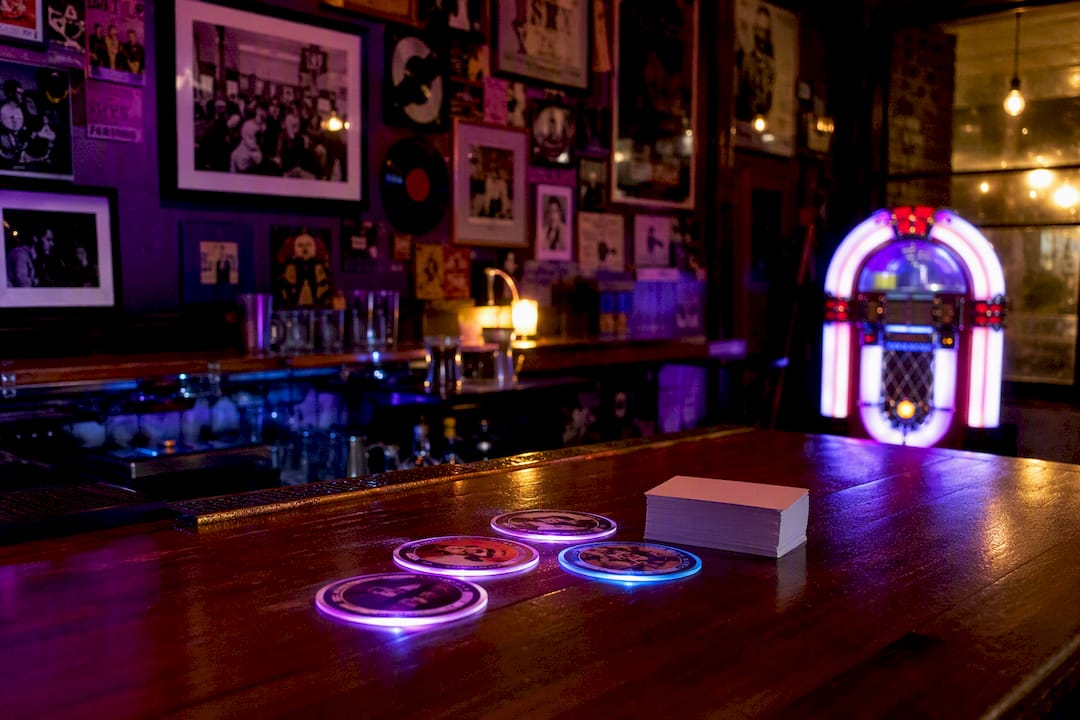
Streaming platforms made short, legal audio previews cheap and instant to serve, which meant a website could offer the "name that tune" experience without needing a DJ or a live host. Around the same time, Wordle's daily puzzle format proved that a single, shareable challenge with a hard daily reset could build a habit loop on its own, no leaderboard or account required. Music sites borrowed that structure almost immediately, applying it to artists, album covers, and lyrics.
The next evolution came from attribute-based feedback, the kind Riffiter uses, where a wrong guess narrows the field by genre, era, or country instead of leaving you guessing blind. That mechanic borrowed directly from word games like Wordle's letter feedback, adapted for music metadata instead of spelling.
The most recent shift is toward personalization. Rather than one puzzle everyone shares, playlist-run formats let a player, or a friend group, build a quiz from music they actually chose. That moves the genre from a daily habit toward something closer to a practice tool or a party game, which is where platforms like Songle now sit.
Where Do People Actually Play These Games?
Most artist-guessing games live in one of three places: standalone browser sites, mobile apps, or embedded posts shared through social platforms.
Browser-based hubs are the easiest entry point since they require no download. Sites offering daily puzzles, like the format Artdle uses for art history, work the same way for music: bookmark it, play once a day, done.
Mobile apps serve a different crowd. Listings for games positioned as "Guess The Singer" style quizzes lean into repeated, multi-question sessions rather than a single daily puzzle, which suits players who want to play for twenty minutes on a commute rather than thirty seconds at breakfast.
Then there's community discovery, which is arguably how most casual players find these games in the first place. Threads on music subreddits regularly surface niche variants, like Featurle's feature-credit twist, that never show up in app store rankings but spread fast through word of mouth. Discord servers built around specific genres or fan bases often run informal versions too, sharing daily results as screenshots.
Playlist-run platforms tend to live slightly outside this ecosystem because they depend on an external library, usually Spotify, to source songs. That makes them less discoverable through casual browsing and more likely to spread through a direct link someone shares after building a custom quiz. If you're hunting for a specific style of game, checking music forums and quiz-focused subreddits will usually turn up more variety than a general app store search.
Which Guess the Artist Games Stand Out and Why?
A handful of formats have carved out distinct identities within this genre, each solving the recognition problem a different way.
Riffiter built its identity around attribute feedback. Instead of just telling you "wrong," a missed guess on Riffiter's daily game tells you how close you were across sound, era, origin, and fame, plus a blurred album cover as a visual clue. That structure rewards logical deduction as much as raw music knowledge.
Artdle applies the daily single-puzzle format to art history rather than music, but the mechanic transfers directly: one subject, limited guesses, and optional learning content attached to the reveal. It's proof that the Wordle-style daily format works across categories, not just music trivia.
Featurle takes the opposite approach from a straightforward "name the artist" prompt. It asks you to guess based on who an artist has been featured with, which rewards fans who track collaborations closely rather than casual listeners. Discussion threads around Featurle show it spreading mostly through community shares rather than app store discovery.
App-store multi-question quizzes stack repeated rounds into one sitting instead of a single daily reveal, appealing to players who want a longer session rather than a quick daily habit.
Songle distinguishes itself by running full playlists instead of single puzzles, scoring each song individually and letting registered users build custom games from any Spotify playlist. That combination of run-based scoring and personalized content is uncommon among the formats above.
Who Actually Plays These Games, and Why?
The audience splits fairly cleanly into two groups, and most players don't realize they belong to both depending on the day.
The first group treats it as a quick social ritual, similar to how people play Wordle. They want one puzzle, a fast result, and a screenshot to send a friend or post online. This group skews toward casual listeners who enjoy music broadly but don't necessarily track deep catalog trivia. The appeal here is bragging rights and a shared daily moment, not depth.
The second group wants something closer to practice or training. These are often heavier music fans, playlist curators, or people building a specific knowledge base, like recognizing artists within a genre they're newly exploring. This is the group playlist-run formats serve best, since a single daily puzzle doesn't offer enough repetition to build real recognition skill.
Age and platform habits split along similar lines. Younger players discovering games through social shares and Discord tend toward the quick, communal daily formats. Players who came to music trivia through radio quizzes or bar nights, and who now want a digital equivalent, gravitate toward longer sessions and custom content they control. Both groups overlap heavily with people who already build and share playlists as a hobby, which is part of why a personalized, playlist-based format resonates with a specific but loyal slice of the audience.
What Makes These Games Hard to Get Right?
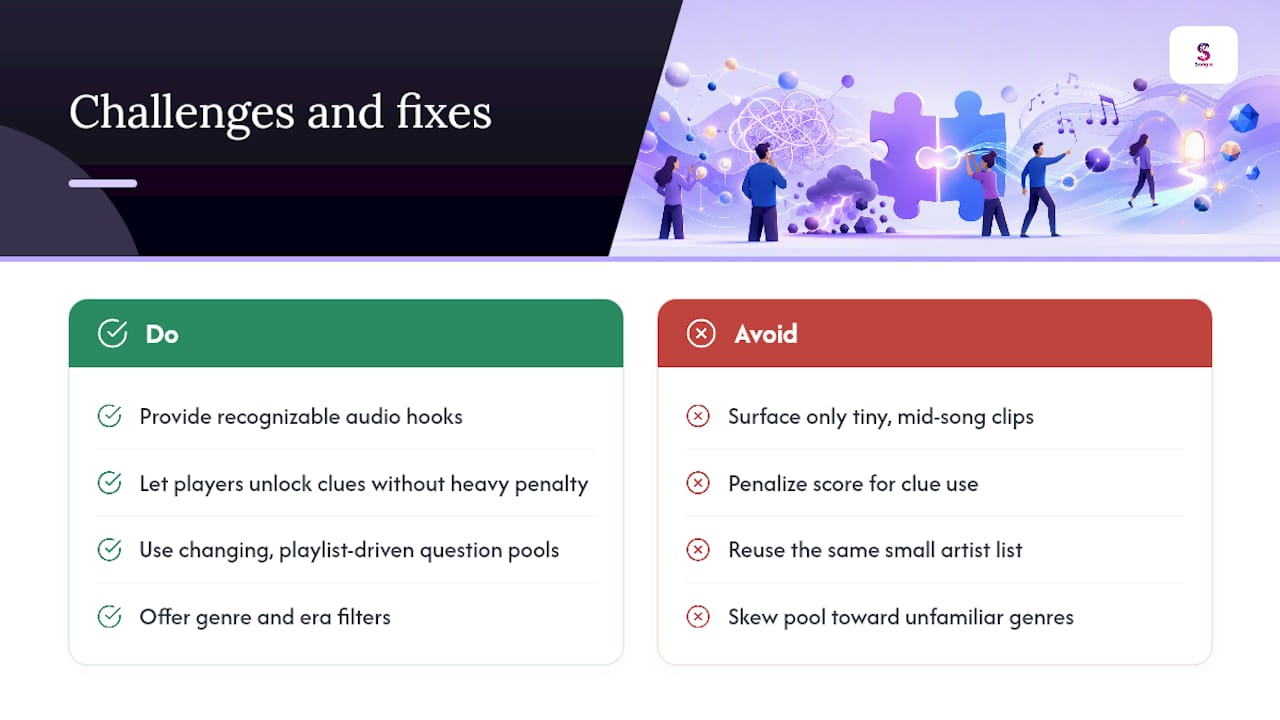
The most common frustration isn't the guessing itself, it's audio that doesn't give you enough to work with. A three-second clip from the middle of a song, with no clear vocal hook, can make even a familiar artist unrecognizable. Games that let you unlock more audio solve this, but only if the unlock doesn't tank your score so hard that it stops feeling worth it.
Repetition is the second major complaint. Daily puzzle formats live and die on variety, and a game that recycles the same handful of artists burns through its audience fast. This is one reason playlist-run formats have an advantage: pulling from a real, changeable playlist means the pool of possible answers isn't fixed by the game's own limited question bank.
Genre bias trips up plenty of players, too. Someone who knows pop and hip hop inside out can go blank on a puzzle pulled from indie folk or classic jazz, not because they lack music knowledge, but because the game's question pool skews toward genres they don't follow. This is where attribute feedback earns its keep. Riffiter's system, for instance, narrows the field by genre and era, so even an unfamiliar artist becomes guessable through elimination rather than blind luck.
Finally, there's the account friction problem. Plenty of players lose interest the moment a game demands a signup just to try one round, which is part of why free, no-account access to a curated playlist matters as a first impression.
What Do You Actually Get Out of Playing?
Beyond the fun of it, guess the artist games double as a low-effort way to sharpen real skills. The most obvious one is music knowledge itself. Playing regularly, especially runs built around a genre you don't know well, forces exposure to artists and eras you'd otherwise scroll past.
There's a cognitive angle too. Attribute-based elimination, where a wrong guess narrows the field by genre, decade, or country, is a small logic puzzle wrapped inside a music game. You're pattern-matching under a mild time pressure, which is the same skill set behind word games like Wordle, just applied to sound instead of letters.
Social connection plays a bigger role than most players expect going in. Daily puzzle formats build a shared reference point, similar to comparing Wordle scores each morning, and that habit of sharing results out loud is part of what keeps these games popular as a genre. Playlist-run formats add a different social layer: building a quiz from a playlist you curated and sending it to a friend group turns a solo activity into something collaborative.

There's also a practical training benefit that's easy to overlook. If you're trying to get better acquainted with a genre before a festival, a road trip playlist, or just want sharper recall of an artist's back catalog, running a focused playlist repeatedly builds recognition faster than passive listening ever does.
Why I Think Runs Beat Daily Puzzles for Serious Practice
Daily puzzles are great for a thirty-second habit, but they cap out fast if you actually want to get better at recognizing artists. A single guess a day doesn't give you enough reps.
If your goal is bragging rights and a shared moment with friends, stick with the daily format. If your goal is building real recognition in a genre or training for something specific, a playlist run gives you the repetition a single puzzle can't. Try building one run around music you half know, and see how much your score improves by the third replay.
— Giacomo
Ready to Build Your Own Playlist Run?
You can start playing right now with zero commitment: Songle's curated playlists are free to try, and you don't need an account to jump into a run. Just pick a playlist, hit play, and start guessing.
If you want to go further, signing in unlocks the paid feature that turns this from a casual game into something personal: building a custom quiz from any Spotify playlist and sharing it with a link. Whether that's testing friends on your own taste or training on a genre you're trying to learn, the Songle FAQ walks through exactly how the custom playlist creation and sharing process works. Head to Songle to start with a free playlist today, and build your first custom run whenever you're ready to level up.
Sources
- JamBase Games - Name That Artist
- Guess the Artist: Free Daily Music Game · Riffiter
- Artdle - Daily Guess the Artist Game